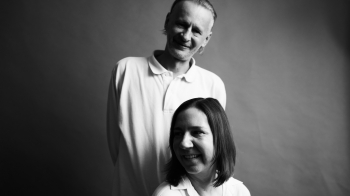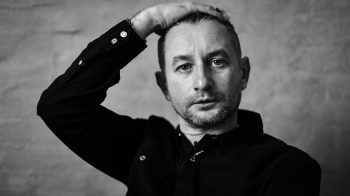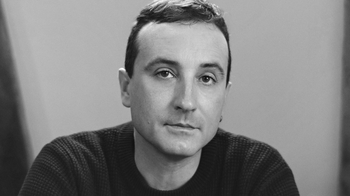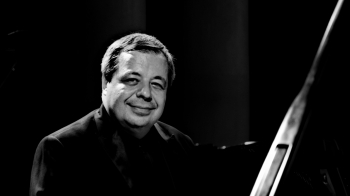
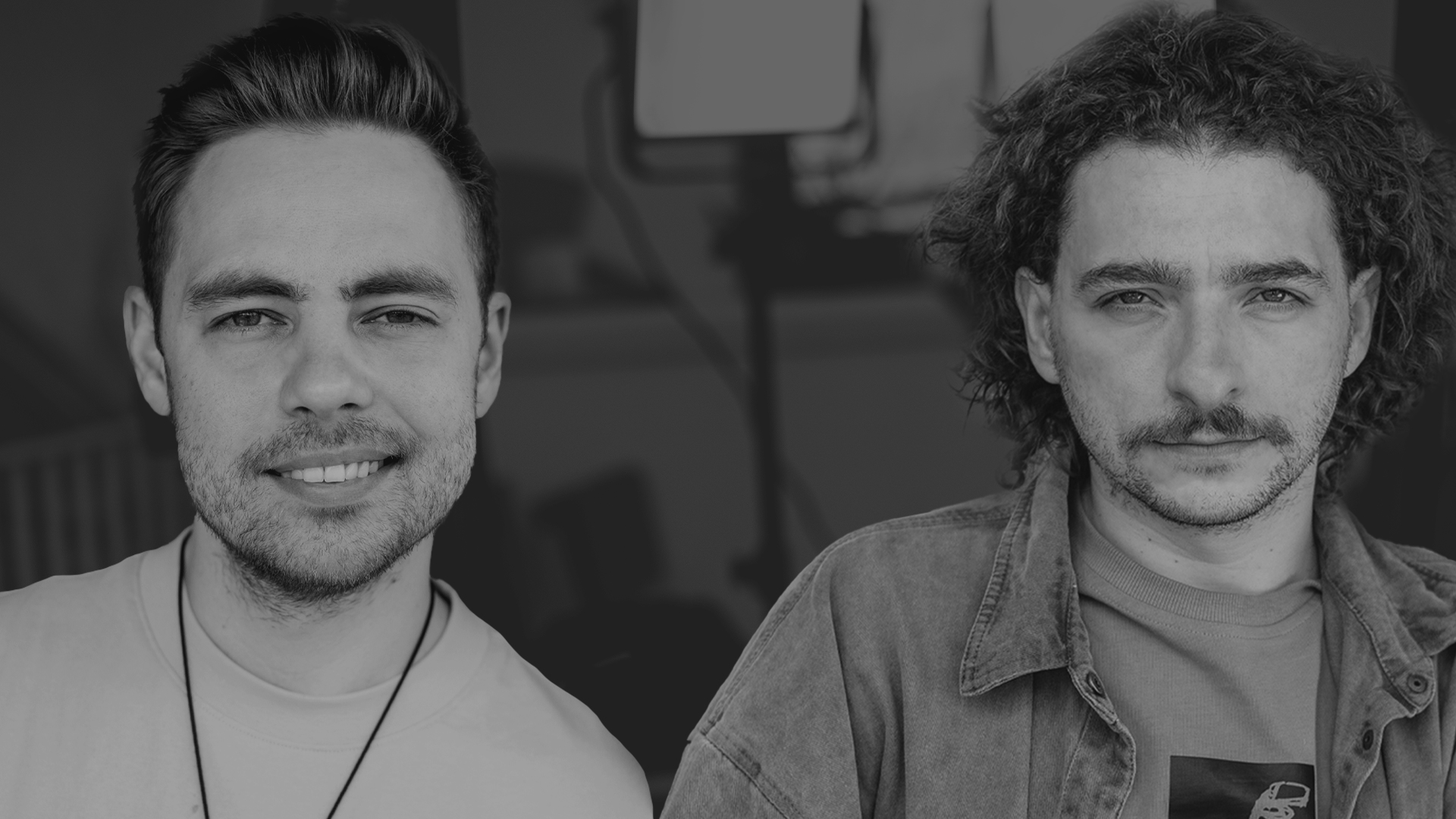
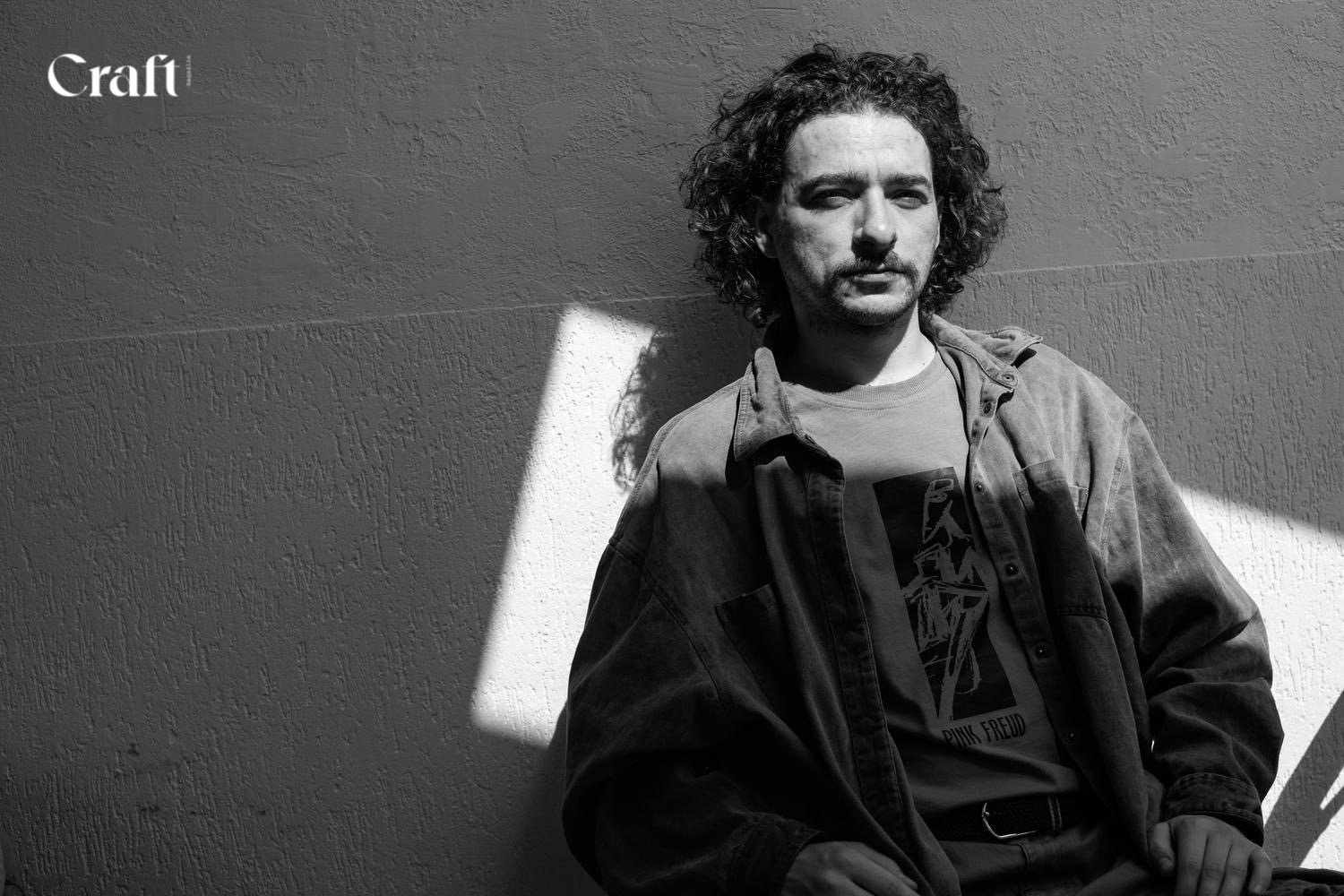
Vasyl Baidak is a Ukrainian stand-up comedian, writer, and volunteer. One of the most recognizable voices in contemporary Ukrainian comedy, he is known for his intelligent humor, absurdity, and a refined sensitivity to language. He often describes his performances as a form of absurdist comedy.
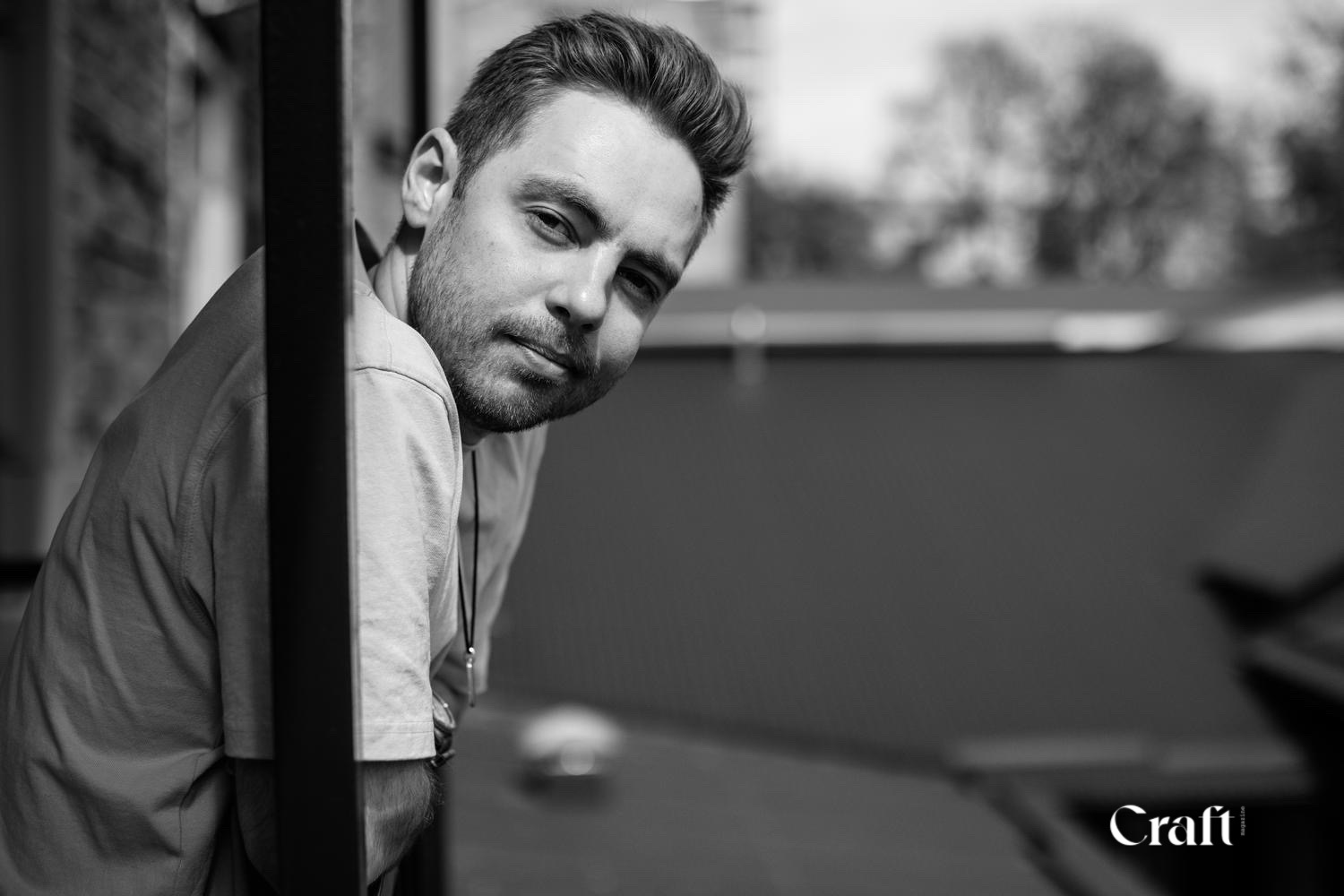
Anton Tymoshenko is a Ukrainian stand-up comedian, radio host, and writer. He hosts the comedy show Homin Out on Promin Radio, is a participant in League of Laughter, a two-time winner of the TV show Make the Comedian Laugh, a resident of the Underground Stand-Up club, and one of the leading figures of the Stand Up Time club. His work frequently engages with political themes and sharp social commentary.
Tell us briefly how you two even met.
AT: Well, I definitely saw Vasyl for the first time at a stand-up show. Pretty sure it wasn’t anywhere else. Maybe we bumped into each other in a pharmacy somewhere, but I don’t remember that.
VB: Not likely. I didn’t go to pharmacies until I was 18.
AT: Damn, yeah… so when was the first time? Probably at some Heaven Club (in Kyiv), right?
VB: Probably at Pidpilnyi (Underground stand-up). Either at Heaven Club or right away on the big stage at Bel étage Event Club.
AT: I honestly don’t remember the first impression at all. I just knew: “This is Vasyl, he’s already an experienced comedian, he does theater.”
VB: And for you, I think the first time I saw you was on Make Comedian Laugh (a Ukrainian comedy TV show where participants try to make invited comedians laugh within a set amount of time), the bit for 50,000 hryvnias. And I was like, “Whoa!” You know, for me you were immediately associated with money.
AT: Nice. Because at that time I didn’t associate myself with money at all. That fifty, I literally held onto it like this, just staring at it, not knowing what to do with it, you know?
VB: Back then, people who won fifty on Make Comedian Laugh were either some wild grandmas, or really funny jokes.
Since we’re talking about money. Doesn’t commercial stuff or working with brands somehow mess with your freedom to joke?
VB: I only do collaborations when it’s a 100% match. Anton takes everything. (laughs)
AT: When they give you freedom — that’s key. I also can’t do it if there’s censorship or tight restrictions. That’s why I don’t actually have that many integrations on Instagram.
VB: I have like five integrations total. They’re just long — they stretch over a month.
AT: And I’ve got maybe six, I never really counted. Remember when we once performed at that marketing forum? Lera Tolochyna invited us, and there were brands there. It was cool because the brands actually gave the comedians freedom. If they want the best effect from the integration, they should let the comic do their thing. And the brands were like, “Oh yes, full freedom. Just please, we have a super-native ad, and we want you to say the name of canned fish. We’re advertising them. Say this brand name three times.” And I’m like, “Maybe we can do it another way?”
VB: I’ve turned down integrations when they’d already written a script and then said, “We need you to change this.” And I’m like, “No, I don’t want to.” And they go: “Change it or…” And I’m like: “Then no thanks.”
AT: For most integrations, I’m like: it’s just money, I’ll do the bare minimum so it still feels okay for me. The main point is: it’s money. I rarely put real artistic effort into integrations because I always feel like the brand won’t follow my vision. Except the recent one — like the Uklon (Ukrainian online car-hailing service) integration in Concert No. 7. That one was perfect for me. I just wrote some short jokes…So the Uklon driver comes onstage — it’s Nikita Trandafilov — and we just read short jokes, like dead jokes. Ten jokes and done. I’m like: let’s just tell people some funny stuff, break the fourth wall, keep it simple. Lots of jokes. Because it’s stand-up, people want jokes. They don’t need some storyline where I’m riding somewhere in a car — just jokes. And it totally worked. Uklon immediately got what I wanted.
And you both write your sets yourselves, right? Without scriptwriters?
VB: Yeah. Exactly.
AT: Yeah, same here. I used to just think things through, and then I started wondering what it would look like written down.
VB: No, I absolutely cannot let anyone write anything for me.
AT: It’s hard sometimes — really hard — but I’m like, well… that’s the job. And even when another comic tries to punch up a joke for you, it might be funny, but I’m still like, “That’s not me. I don’t say things like that.” It just feels off. That’s why when I go over material with other comics, I’d rather they just help me understand the direction, not give me a specific joke.
VB: I don’t go over material with anyone. I don’t show anything to anyone.
AT: But you don’t workshop with anyone at all?
VB: Never.
AT: You never had a comedy pair? So you read Judy Carter and went “no”?
VB: No. I mean, with Liza I might ask something, but overall — I do everything myself.
If we talk about Ukrainian stand-up as a phenomenon, and try to outline a timeline, we’d have to include you both. You’re not just performers — you’re basically theorists of stand-up. The people who shape it.
AT: “Theorists of stand-up.” Makes me want to adjust a monocle.
As a viewer, I notice how much it strengthened during the war, but maybe I’m wrong… Basically, the history of Ukrainian stand-up in independent Ukraine — how did it develop?
AT: It’s obvious there was a boost, and the reason is simple: people stopped watching russian stuff and started looking for alternatives. People still found us before, of course — Ukrainian stand-up existed — but the audience was smaller. And it bothered me that Nurlan Saburov could come here and sell out the October Palace (the biggest performing arts center in Kyiv — ed.) twice in a row, and I was performing in a basement. I was like, “I mean, I’m funny too.” And not just me — I know comics who are hilarious.
VB: Yeah, it wasn’t about quality, it was just commercial stuff. Advertising, marketing.
AT: Exactly. Some people have money, Gazprom throws money into TNT (russian federal TV channel), their budgets are huge, they push themselves everywhere. And here, you earn the money yourself, and then you invest it into your YouTube special. You break even, but at least you release something.
VB: Yeah, because advertising didn’t come here. Ukrainian brands weren’t jumping into… Before the full-scale invasion, there wasn’t integrations in stand-up or even in YouTube shows. Maybe Lions on a Jeep (independent humorous content), maybe Ebaut (open show about life’s real — but taboo — topics — ed.), those big shows had something.
AT: No one invested money, basically. Comics built this market themselves. Comics and the people who organized their shows. Just with our enthusiasm and desire to do this, we created this little market. Before that, there was nothing.
Do you think Ukrainian stand-up has already beaten Kvartal 95 (Ukrainian production company founded in 2003 by Volodymyr Zelensky—ed.)?
AT: Depends on how you define “beaten.” I guess Yevhen Koshovyi (Ukrainian showman, TV presenter, and comic actor) needs to come, kneel before our club, and say…
VB: …and drop his armor.
AT: …and hand the cloak over to Sviat Zahaikevych (the founder of “Underground stand-up” comedy) …
VB: …take off his amulet of immortality and present it to Uncle Zhenya.
AT: Stand-up has gotten a huge boost, but at the same time, to me, our YouTube humor is slowly sliding toward Kvartal. I mean, much less different than before.
VB: Well, the difference is definitely that they do sketches and we do stand-up.
AT: Yeah. But the jokes are the same, the overall humor level… In reality, it’s hard to maintain high quality for a long time. And some comedians go, “Well, we’re not even going to try anymore.” And then everything just follows a pre-set formula and slides into toilet humor.
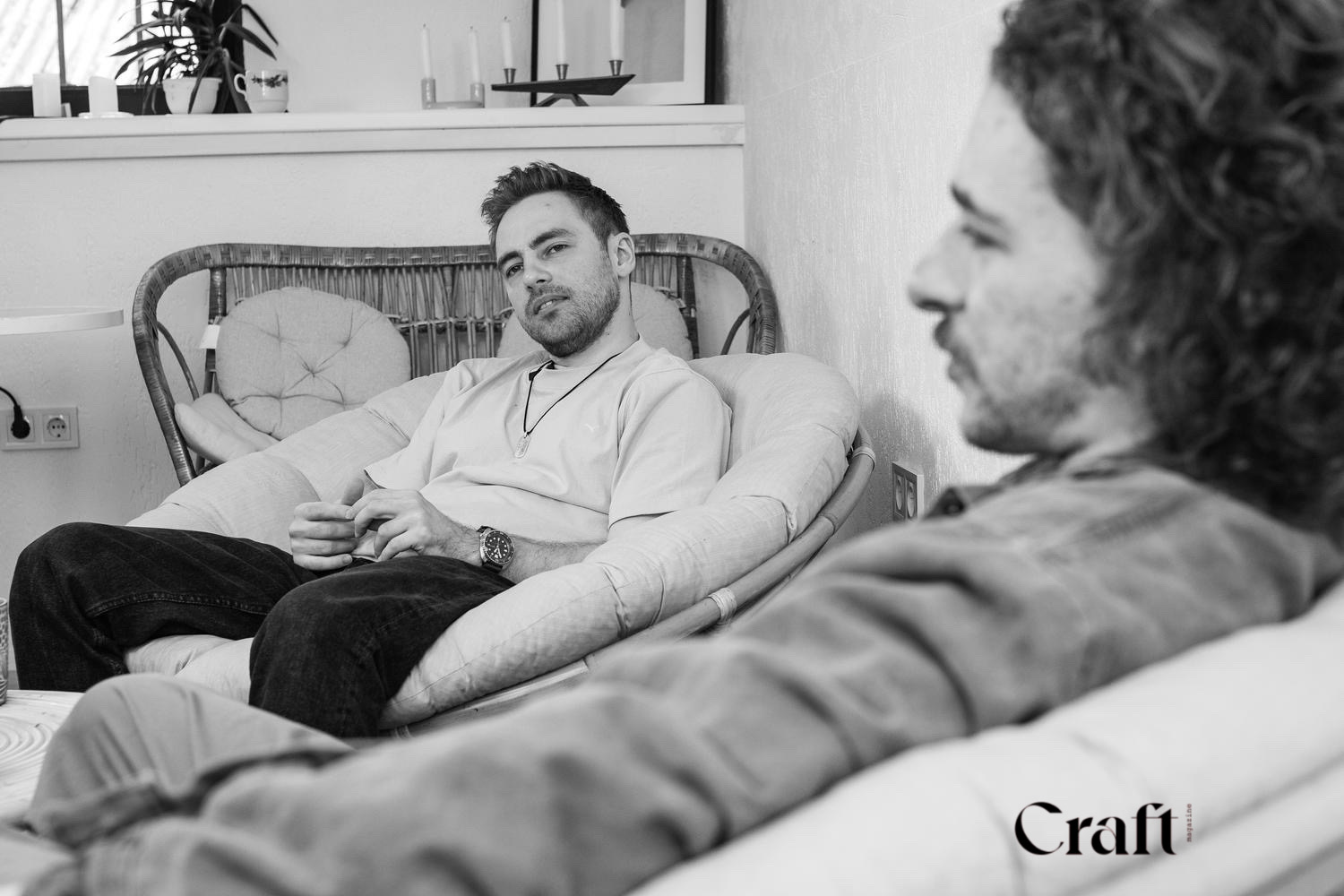
VB: But they still have their audiences. All of them. So if you look at audiences, Kvartal will keep theirs, Dizel Show (Ukrainian comedic concert show) will keep theirs, Varyaty Show (Ukrainian comedy show) will keep theirs, and stand-up will have its own. I don’t see one group migrating to another.
AT: Someone from Kvartal — a scriptwriter — told me things have gotten much worse for them. People are quitting, budgets are being cut, because things aren’t going so great anymore. Because Zelensky simultaneously boosts and tanks Kvartal’s rating. People associate Kvartal with him. So if there’s something they don’t like, they go: “Well, then we won’t go to Kvartal.” I think that’s one of the reasons this empire is declining. But honestly, I’m fine with these empires collapsing. Better to have lots of different projects than one that monopolizes everything. When you have a monopolist, quality is never going to improve.
VB: No, well, they’re definitely not monopolists anymore. Neither Dizel nor Kvartal.
AT: True. But they used to be super-monopolists.
VB: Yes, they did, they did. Really, during Zelensky’s time. They were working very actively.
AT: I just think YouTube is becoming the new TV, and so Kvartal, as I see it, is slowly fading, but YouTube itself is turning into something very TV-like. All these stars, all these show personalities — it’s all starting to look the same. The same people circulate between shows. And the shows themselves are mostly improv. Almost all of them. And good improv doesn’t always work out. But for people to put something on in the background — it doesn’t matter much what’s there. The views add up anyway, because… Even if it’s just a conversation with a couple of jokes, it’ll still get views. Basically, business is dictating the rules of YouTube now. Do you think YouTube is becoming like TV, or not?
VB: I don’t know. Still, there’s one big difference: TV is different from YouTube because TV always gives you something. You just turn it on — whatever’s on, is on. YouTube, you’re choosing.
AT: I mean in terms of content. Style, tone, that kind of thing.
VB: Well, yeah — the fact that YouTube can now match TV in picture quality, that’s for sure. Our shows look insane. Honestly, I don’t think there’s anything abroad that gives that kind of visual experience on YouTube.
VB: Logically, streaming services should step in. I mean, we have streaming platforms, but if they actually worked properly and had money, they could start producing their own content. Then streaming could replace traditional TV.
AT: But as far as I know, they don’t have much money.
VB: They don’t.
Do you think we can consider stand-up audiences more “intellectual” than audiences watching mainstream TV comedy shows?
VB: Stand-up now has such a wide variety of comedians that you can’t really claim it’s intellectually different. It’s more about taste. Honestly, all sorts of people come to stand-up now — different social layers, genders, ages, I think.
AT: I’d like to think stand-up audiences are more intellectual, but yeah — we have different comics, different material. I also have jokes that are more refined, and some that are just straightforward, aimed at pure entertainment, not intellect. I’d like it if everything moved toward more sophisticated humor, but I’m not sure it will. Intellectual humor works best when society has some basic stability. If society has a lot of problems and lacks basic necessities, people don’t have energy for complex content. They’ve worked hard all day and just want something easy to watch in the evening — something simple that doesn’t require lots of reflection. That’s why they choose lighter formats. They don’t want a one-and-a-half-hour complex show. They want entertainment first. But it’d be cool if that changed. I think it will, over time, because the stand-up audience is growing. I can even see people sometimes demanding something cleverer, like: “That’s a dumb joke, give us something better.” And I think, “Oh, that’s fun — people actually want something more challenging.” That seems to be a trend.
VB: But then again, what is intellectual humor? What even counts? Sometimes you just want to drop a cheap, easy joke. So it’s a tricky criterion to judge by. Even meta-irony can seem like a dumb joke at first, but once you get the context, it’s not really dumb anymore.
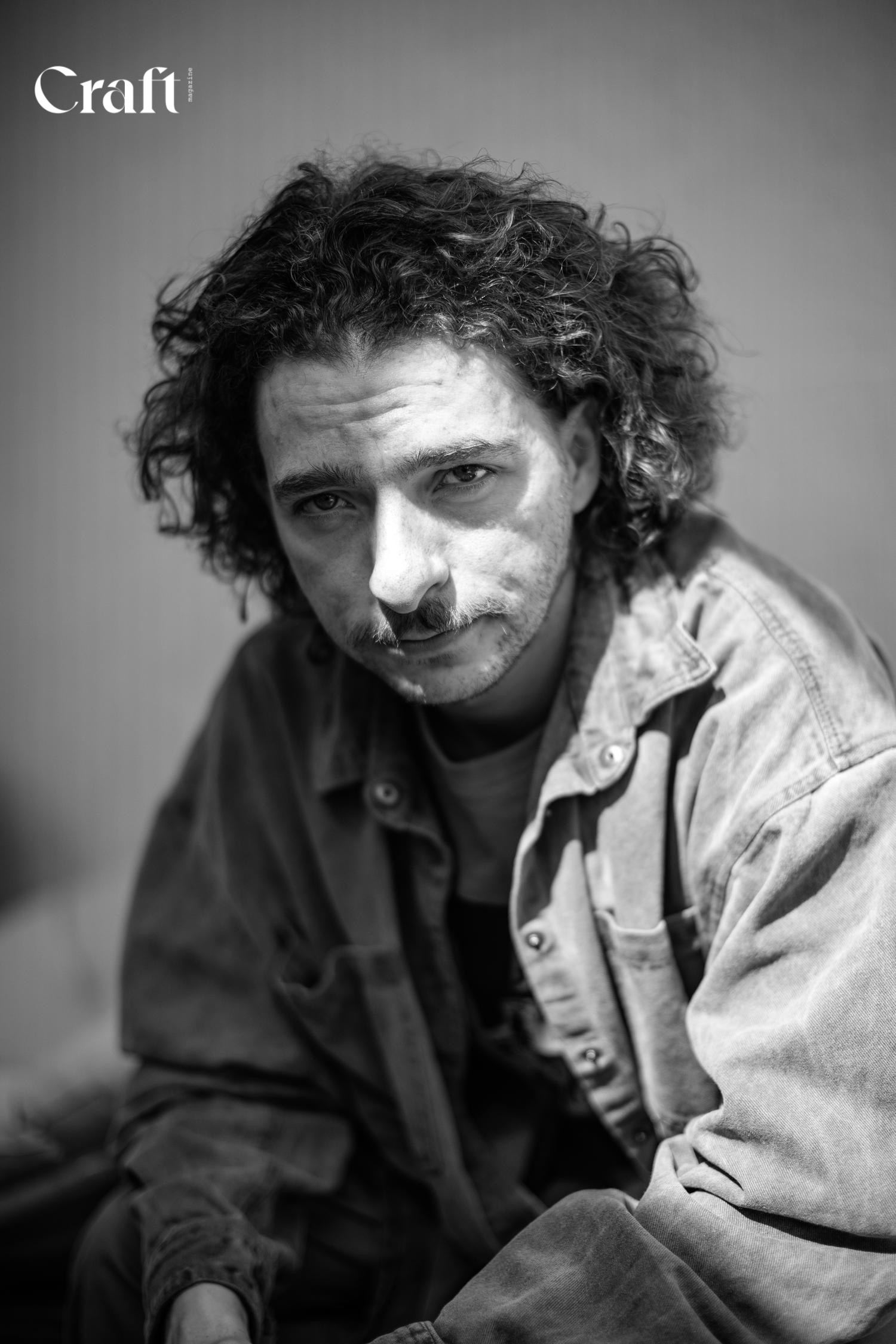
AT: There’s a category of people I know for sure — they’ll watch a dentist joke. Really smart people. And what makes them laugh is the fact that such a primitive joke exists, and they can see it, see other people’s reactions, and just find it funny that this dumb joke amuses someone.
VB: Yeah, probably. But based on who’s laughing at a particular joke, I wouldn’t try to judge the audience’s intelligence. You can maybe get a sense of the audience when someone comes to a solo show of a specific comedian.
AT: I don’t know about your shows. My audience has changed so much that sometimes I don’t even know who’s there. Sometimes it’s a lot of young people, sometimes mostly older people. And I’m like, “Who even are you?”
VB: Yeah. With Anton, we just do stand-up, and the audience comes naturally. But if you approach it from a commercial angle, you clearly define your audience, and you hit them precisely — down to the design, the jokes, everything.
Who did you listen to as a teen?
AT: My parents, mostly.
VB: Donald Duck.
AT: Up until I was 20, before I got into a normal, conscious university phase, I watched only Kryve dzerkalo, some Comedy Clubs, KVN (reference to the long-running Soviet and russian comedy television show "Club of the Funny and Inventive”, Klub Vesyolykh i Nakhodchivykh). Lots of KVN.
VB: Well, what else could you have watched?
AT: Yeah, that’s all I had on TV.
VB: Same as all of us — we had TVs, and that’s what they showed.
AT: I had a PeopleNet modem, but the internet was terrible. I got it in ninth grade. I spent all my data on World of Warcraft. Wouldn’t recommend it.
VB: When VKontakte (russian online social media and social networking service) appeared, that’s when I got into Western stand-up — started digging, discovering…
AT: Same. I found Arvin Mitchell (Standup comic, actor, writer), Doug Stanhope (American stand-up comedian, author, actor, political activist and podcast host), and I was like, “Ah, wow, you can joke like that?”
VB: Then Eddie Murphy, then torrents showed up — and I’d just go to the “foreign stand-up” section and download everything. Literally everything, without even checking names. I just had to watch it all.
AT: It was an incredible time, when you’re watching for the first time…
VB: …when you’re discovering your cult comedians.
AT: …when you see Stewart Lee for the first time and you’re like, “Oh, so that’s possible?!”
VB: I completely lost it back then.
Who among them would you want to perform with?
AT: Oh, with many. For starters, it’d be nice just to see some of the legends — a few have come to our club.
VB: I’m slowly working on that.
AT: Stephen Fry was here, Letterman was here, Doug Stanhope was here.
VB: I missed Letterman though. As for who… I’d like to meet Bo Burnham (American comedian, actor, and filmmaker), just to see how he… works on stage. It’s important for me to meet someone and see how they exist.
AT: I’d like to film a special with him. Like, have him shoot my special. That would be… yeah.
VB: I just want to meet the person and see how they think. Like — how someone whose work inspires you actually exists. That’s what’s cool.
AT: I’d like to perform with all those comedians I used to watch — Chappelle (American stand-up comedian and actor), Bill Burr (American stand-up comedian, podcaster, actor, writer, and director), and…
VB: I wouldn’t want to perform with Chappelle. You would?
AT: Yeah, just to understand how it even works. Maybe it would be the worst night of my life. Maybe. But I want to understand what’s going on there — what the energy level is, how he…
AT: I’d want different experiences, really. If I had to choose someone I’m absolutely sure I’d want to perform with — someone I think it would be great for me — I don’t even know. You don’t know a comedian’s temperament. It’s hard to predict. Like Stuart Lee — they say he’s really arrogant. …
VB: Well, I met him. We took a photo, I talked to him a little, and he ran away from me.
AT: Ah, well, that really adds to his image.
VB: Yeah. And Richard Herring (English stand-up comedian and writer) later said he’s a very difficult person.
VB: I’d like to meet Steven Wright (American stand-up comedian, actor, writer, and film producer).
AT: Well, yeah. I really wanted to meet Doug Stanhope at some point, and thanks to Vasya I was able to. So that sort of closed the loop for me… I calmed down because I just talked to him. Totally normal, regular person.

Tell me about the negative side. Like, do people tell you: “There’s a war now, you can’t joke about that”?
VB: No, that doesn’t happen anymore.
AT: Oh come on, Vasyl!
VB: Like “the war, you can’t laugh about that”?
AT: I get messages all the time saying you can’t joke about certain things. Maybe it’s because of the topics I pick, but people write that to me a lot.
VB: Like about what?
AT: Well, the thing with the geese and the rules of warfare. Different people see different parallels. They say I’m always joking about prisoners of war…
VB: Oh no, I never interpreted it that way.
AT: Or about language — the language issue — I get messages about that often.
VB: Well, the language issue, yeah, that’s constant.
AT: For me all that negativity… I realized it’s all online. It really does hit you, but it’s all on the internet. In real life — no one has ever come up to me and said, “You can’t joke about that.” Not once. And now I’m like, damn, it would be nice if someone did at least once. Because in person everyone is so sweet.
Have you ever been beaten up for a joke?
VB: I have — but that was a conscious decision on my part.
AT: Oh, that one? The low kick.
VB: Well, we were performing at the Octagon (An octagonal cage in which mixed martial arts (MMA) fights are held). It was during “No Rules Fights.” And after us there were supposed to be actual fights, and there were a lot of fighters there. And these fighters, they were making a lot of noise, and I told them to quiet down. And they were like: “Yeah, let’s go outside.” I said: “Bring it on.” So he steps inside the octagon. And I realize I need to somehow neutralize him, so I said: “Okay, you give me a low kick, and I’ll counter you with a joke. With wisdom.” So he gave me a low kick — a good, solid one. Then I gave him some wisdom, and that was it. I earned their respect. He walked off, and afterward, I was treated like royalty there. I’d come back, and everyone was like: “Oooh!”
I got told to f*** off a lot, straight to my face.
AT: Yeah? When was that? When you were just starting?
VB: In Kharkiv. I also performed literally everywhere I could. This was already spoken stand-up, with actual material. Like, at the “Misto” club, say — it’s nighttime, everyone’s partying, and suddenly someone goes: “Oh, now there will be stand-up.” And people are like: “No.” But according to the program, I have to go on stage and read 15 minutes of jokes. And those were absurd jokes back then — I’m reading something, and someone yells: “F*** off.” And I say: “Come on, come up here, say it to my face.” And he came up — I called him on stage — he said it to my face. And I go: “Now stand here.” Basically, embarrassed him. That kind of stuff happened a lot.
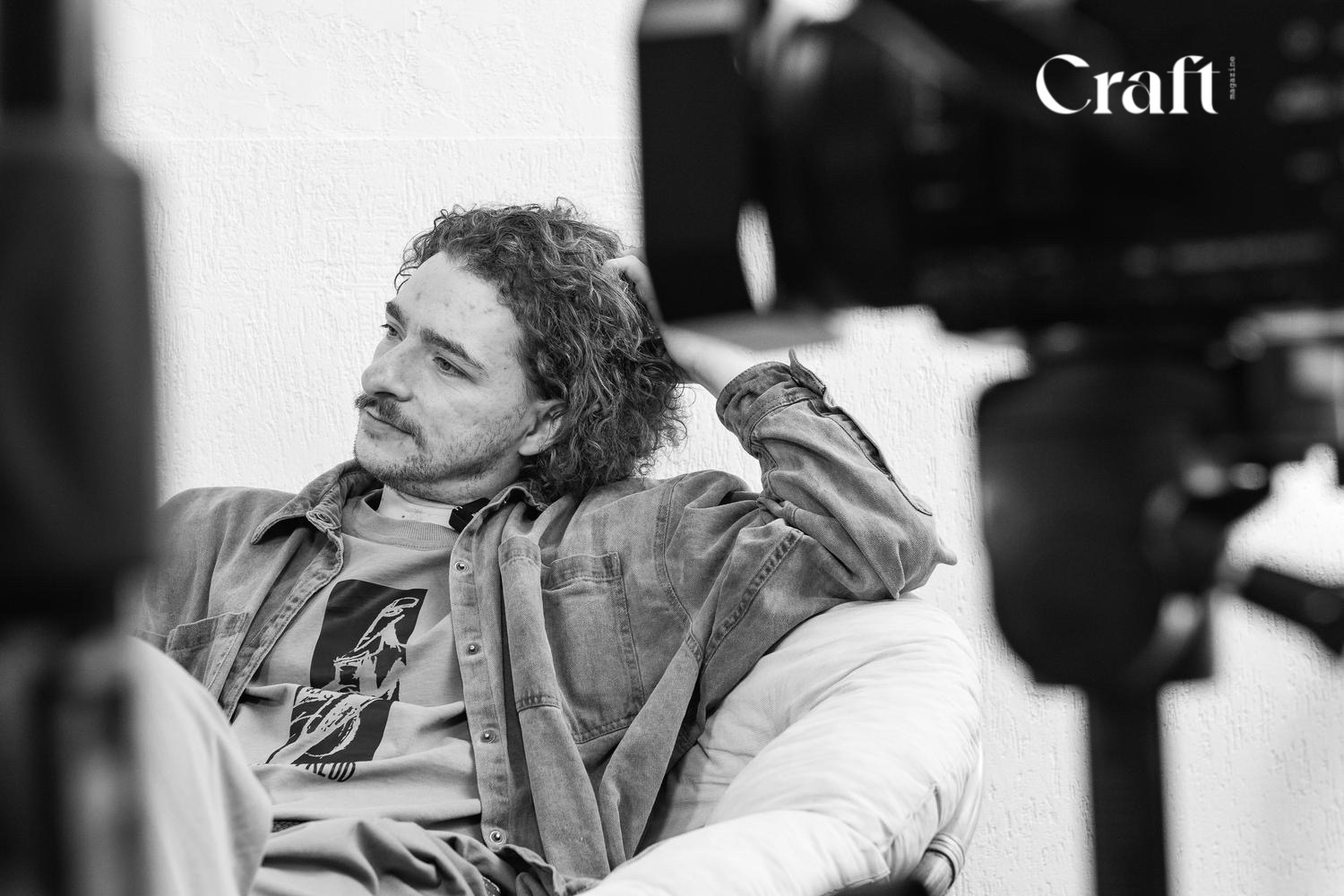
Are there jokes you feel ashamed of?
AT: Not really. There are jokes where I think: “Well, that could’ve been better,” or: “When I started writing this idea, I was too young to execute it well.” There’s just some failed improvisations, but for me the whole point of improv is that comedians might mess up. Because you have to generate jokes fast and in big quantity. I did have a cancellation for some jokes from “Non-Political” program. There were two jokes people considered grounds for canceling me. One of them — I completely disagree with. And the other one — I’m like: “Okay, yeah, maybe I could have written that bit better.” But that’s not a feeling of shame. Because I don’t want stand-up to be a place where you feel genuine shame for a joke. It should be a space for the comedian to explore, understanding that yeah, you might cross some line sometimes. And then maybe apologize later…It’s just this thing where you’re expected to apologize to Ukrainians constantly. At some point there was a ton of this — like you must apologize to all Ukrainians. But if some Ukrainians found it funny, why should I apologize to everyone? Then tell me exactly who didn’t like it, list all their names, and I’ll personally go apologize to each one.
What do Ukrainians expect when they come to your shows — talking about your audience? Is it some sort of therapy?
AT: That they’ll leave the show alive — that’s honestly the main requirement for people.
VB: Yeah, number one.
AT: We can’t always guarantee it.
VB: To have fun, relax, and often to contribute to some charity.
AT: Yeah, they know their money will be taken. I’ve even had shows — this was funny — during a test show, that lady came in… I forgot her name, but she often comes to Tochka Zboru (An entertainment project that evolved into a show about letters and words).
VB: Ms. Natalia, I think.
AT: Probably Natalia. And she goes: “I’m finishing the test show.” A test show is new material, not very polished, like an hour. And she asks: “Will there be an auction?” I say: “No, it’s a small venue, I wasn’t planning on it.” And she says: “Okay,” then comes up to me: “I brought cash with me.”
VB: Yeah, she always pays in cash.
AT: “I’ll give it to you.” And I’m like: “What do you mean?” She says: “Here — 15,000 hryvnias. Send it to some fundraiser.” And I’m like: “You’re just giving it?” She says: “Yes.” And I thought: “It’s amazing to have an audience so responsible and aware.”
Do soldiers come?
AT: Yeah, a lot. Yesterday I performed — there was a soldier with his wife.
VB: Yeah, soldiers often come when they’re on rotation.
AT: In cities they often request tickets — we give them.
VB: Yeah, we have free entry for soldiers, just with pre-registration so it doesn’t happen that someone shows up and there are no seats. So pre-registration — sure, welcome. And we also travel to the soldiers.
Is there now some new generation of comedians?
VB: Yes. Yes. A lot — many young ones.
How does it happen? Do they come to “Underground Stand-ups” or things like that?
VB: Now it’s all TikTok, reels. That’s the big push — shorts. Comedians perform somewhere — at parties, at open mics — record themselves, post it. They film themselves and put it up. Doesn’t matter what the quality is, they add subtitles, and a lot of them take off instantly, even though they might have only been performing for six months.
AT: Yeah, social media changed everything. You don’t need to promote yourself for a long time or try to impress someone — you can edit everything yourself, like Matt Rife (American comedian and actor) did. That comedian basically made himself through TikTok, and now he fills stadiums because of it. But on one hand, this gives comedians from social media a fast boost; on the other hand — you read that article too, right? — the quality drops a bit, because comedians realize there’s no point in spending a year writing a polished special concert. Better to write faster, release more material — but the faster and more you release, the more the quality drops.
VB: Well, let’s remember that the most viewed TikTok ever was just someone forgetting to turn off their camera and it’s a black screen in their pocket.
AT: That was probably J.D. Vance or someone from the U.S. Defense Department — they always have phone issues.
VB: No, it was literally just a video of a couch.
AT: It looks like lots of young comedians are appearing, but I also don’t understand — do they want stand-up, or are they more into Instagram, sketches, reels…
VB: I think they don’t want anything in particular. It just happens. I remember myself — I tried everything I possibly could. And honestly, that’s the right approach.
AT: I also tried everything I could, anywhere I could — if something was possible to try, I tried it. That’s actually normal.
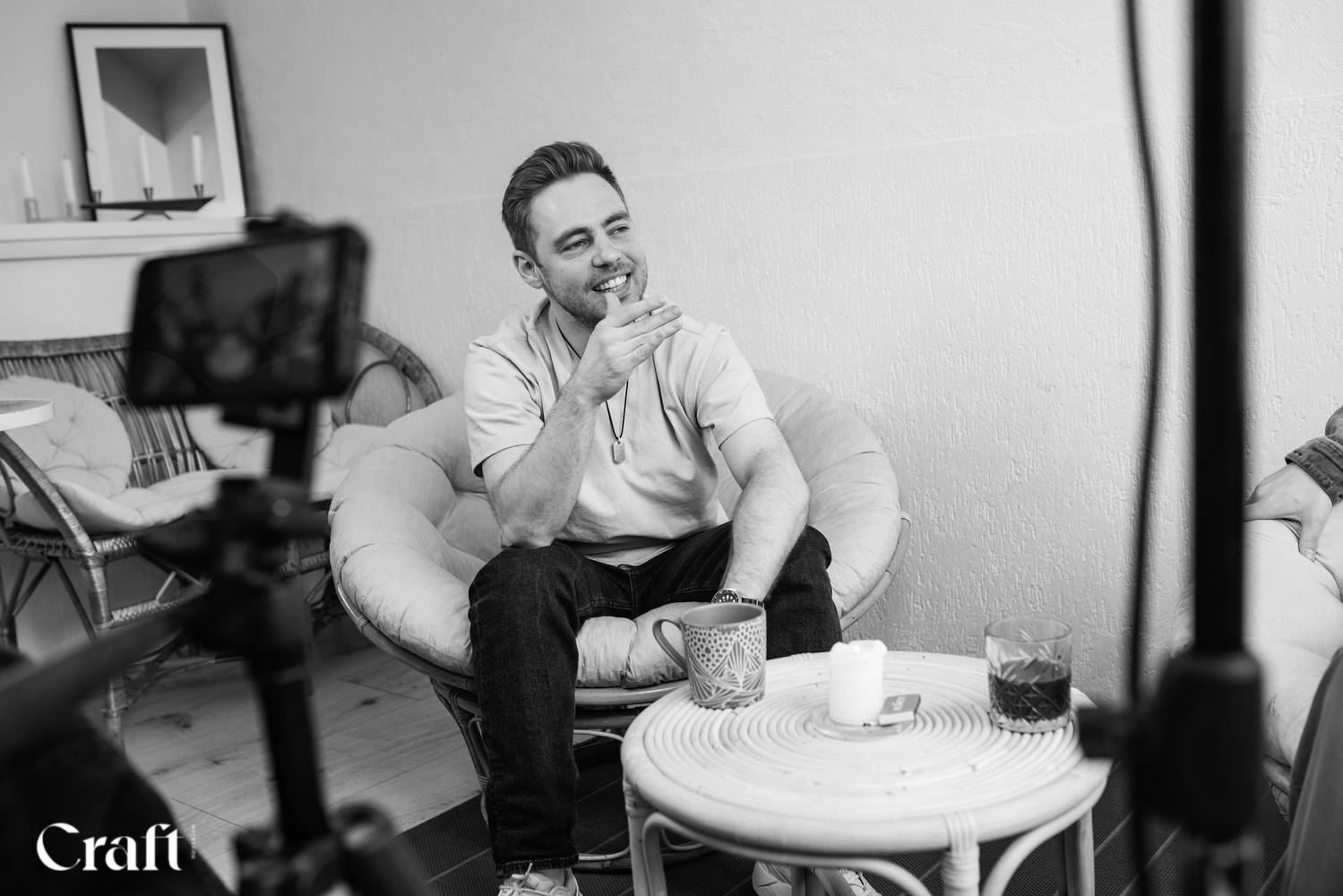
So what will you do next? A new generation has grown up now, they’re already breaking through. How do you think your careers will develop?
VB: Just keep going. I don’t think about “career.”
AT: Yeah, this is absolutely not the time in life when I think far ahead about anything. As long as these concerts can raise money for the army, I understand how that works. I’d like to do something else too, something related, but сan I really afford that?
VB: Yeah, fundamentally it’s still: help first, then personal plans. And if something related to helping others overrides selfish plans, then helping comes first.
Do you feel burnout? Because this is actually not a simple thing.
AT: This is my favorite topic.
VB: Well of course there’s burnout, but what can you do? We’re still comedians in the rear. We’re not at the front, not in the military. So our burnout is completely our selfish problem. Many people now will say: “No, you need to take care of yourself, blah-blah-blah.” But we’re in a full-scale invasion, and russia really is killing people every day…
AT: It’s this complicated position where you feel like youI’ve been burned out for a long time, but you’re we still have to work. And psychologists say, “You must value yourself, give yourself time,” and I’m like: “Yeah, on one hand… but on the other hand I’m in touch with guys I can’t even hint to that I’m feeling off.”
How do you cope with all this? What do you do to relax? Do you go to standup shows?
AT: For example, we don’t relax. Right, Vasyl? Do you relax somehow?
VB: No. Just go work, keep doing something all the time — that’s it, really. I honestly feel better when I’ve raised a lot of money for the military. That’s when I can walk around happy for a week.
AT: Sometimes it can be very hard. You think, “I have to go on tour again, but I don’t want to, I can’t go on tour. I don’t feel like I can.” But when I imagine the amount I’ll bring back and report, I’m like: “No, I can go on tour, everything’s fine.” And that’s what motivates you — that helps. Well, and of course close people, friends, comedians, all that.
What would you be doing if you weren’t doing standup?
VB: Standup.
AT: No, I mean if standup didn’t exist. Come on.
VB: Well, I’d still go into something creative, definitely. I have a law degree, but no.
AT: And if you take away both theater and standup? Like, completely — and blogging too?
VB: Film. Sculpture, woodworking.
AT: Remove all art.
VB: Then what? That’s it, there’s nothing left to do.
AT: I wanted to push you at least toward working at a car service station.
VB: No, I’d be a lawyer, but it would be hard.
AT: Oh, seriously?
VB: Well yeah, that’s my degree. If you removed all creativity for some reason — why would you even do that?
AT: You worked at the civil registry office, I think, and also at a funeral home, right? Which would you choose between the registry office and the funeral home?
VB: Funeral home. Because it’s more fun. There’s no hypocrisy there. In the registry office there’s hypocrisy. “Oh, what a beautiful couple!” And then you go upstairs like: “God, look at them, she’s older.”
AT: That’s a good idea for a bit — that there’s more truth in a funeral home.
VB: Yeah. I actually have that. I really enjoyed working at the funeral home more. People come in, they hide nothing. Someone has died, and they are sad. That’s it.
AT: Is that in one of your standup sets?
VB: In The Andy Kaufman Show, I think.
AT: Oh, that far back. Okay. I saw it but don’t remember. I’d go into advertising. I dreamed about it once. I watched 99 Francs.
VB: But that’s creativity. And we removed all creativity. Advertising is also creative. But yeah, I’d want that.
AT: Okay. Then we remove advertising too. Well, I’d probably go into politics, but not as a politician — more like a political technologist. Because that actually interested me. But honestly, I’m very glad I didn’t become one. And I think a lot of Ukrainians are glad too, because if I were a political technologist, I wouldn’t hold back at all.
Humor is actually used in political technologies.
VB: Of course.
AT: Humor? A huge amount.
VB: One of the main tools.
AT: My thesis was actually about that — humor in politics. I analyzed how Barack Obama used it. He literally had written bits — comedians wrote for him, you can see from the structure it’s basically standup. He’d go out and crush it. And he’s one of the most successful U.S. presidents. It helps a lot.
VB: I think there’s one president right now who might argue with you.
AT: Yanukovych, back in the day, also… actually…
VB: He had comedy speechwriters too. Yeah, yeah.
AT: His whole clumsy persona, the jokes built around it — that really relieved social tension and people’s anger. People hated him, but they laughed at him. And when you laugh at someone, you hate them less. It’s a subtle thing, but it works. The mayor of Kyiv uses that too.
VB: Azarov used that on purpose — that whole language thing.
АТ: Klitschko released a book of his own memes. At some point he published a book — his most famous memes. Because he realized you shouldn’t be offended by this; you should use it. He started riding that wave. He was like, “It’s just a joke.” But it’s not a joke. I mean, the amount of corruption in Kyiv — greetings to Bihus.info (a Ukrainian investigative journalism organization focused on anti-corruption efforts)! If you haven’t seen their investigation, go watch it. I think there are English subtitles too. That’s why Klitschko isn’t so popular with Kyiv residents now. And I think there’s a Boris Johnson effect: in Britain they don’t like him, but here people adore him. And abroad they love Klitschko as a boxer — but we here know that he’s involved in all kinds of shady schemes.
What jokes do Ukrainians love most? What do they like hearing from you? Where do you get the strongest reactions?
AT: My audience reactions vary now, because I’m trying to write material that makes me laugh, so it’s all pretty diverse. For example, my bit about the civil war in the Vatican — sometimes it kills, sometimes only three people laugh. And then I’m like: “I don’t know — is this Ukrainian? Is this for my audience or not?” Political jokes generally work. Although now everyone is joking about politics. What surrounds you — that’s what people actually find funny. When my world overlaps with someone else’s world, that’s when it lands. And that’s usually how it works. What about you?
VB: More or less the same. It’s hard to say specifically what Ukrainians love to laugh about. I don’t know. Good, funny jokes.
AT: You shouldn’t detach from people’s real lives, I think…
VB: Or you should.
AT: Actually, yeah — you can write something absurd, and that’s funny too. See? Even here.
VB: No, there’s no formula. None.
AT: That’s the magic and beauty of standup — anything can be funny.
And how about different cities? Like if you tour around Ukraine?
AT: Oh, Kharkiv audiences react super intensely. People in frontline cities react brighter.
VB: We worked on that.
AT: Created a culture.
VB: In Kharkiv, yeah.
AT: I think people who encounter tragedy more often — when they get a chance to see comedy, they give themselves to it more. They appreciate those moments more than people in Uzhhorod. Okay, that’s a joke. They react fine everywhere.
VB: Yeah, but topic-wise, for example, jokes about shelling will hit differently in Uzhhorod and in Kharkiv, like Anton said. Because people there live under constant shelling, and there it’s rare. That’s all.
AT: By the way, recently I was writing new material. This relates to “what works.” I thought: “Okay, I have a joke again about going to the bathroom during shelling. Probably this topic is exhausted. I’ve done jokes about it, maybe it’s not funny anymore.” And I just throw in the bit to fill some time, because it was a short new-material night. And it kills. I’m like: “Oh, okay. Good. Still funny.” Sometimes you just can’t predict it, so you have to go to people and check.
Why don’t you like AI? Let’s talk about that.
AT: I don’t like AI because, to me, it kills the very idea of creativity, and the quality drops because of that. It’s artificial — something without a soul, I don’t know. And people use it just to cut budgets. And that’s why it all looks… those drawings or those AI-generated ads that are everywhere now — they just… Advertising is already basically puke-inducing most of the time. But sometimes there’s a cool ad where you think, “Wow, that’s a great campaign. I actually want to look at that banner or that video.”
VB: No, it’s just… I’m probably waiting for the moment when AI becomes purely a helpful tool, something that just simplifies certain things. But right now it’s at a stage where too many people think it can do everything instead of you. And that is extremely irritating. I like an individualized world where there are personalities. And when everyone uses the same tool, even though it adds detail based on your request, it still draws from the same giant bucket. And the style… Even when I scroll through reels, I can clearly see what’s AI. And I immediately dislike it, right away, because I don’t like the original idea behind it — how it was created. I don’t feel anything creative in it. I’m like: “This is just a calculated binary system that produced a product. I’m not interested in consuming that. I want to feel that there’s a person behind it, with a story, with something real.” That’s it. And what can I say — I still write my jokes in a notebook. I don’t even like using a computer.
AT: He has one of those phone cases that open like a little book. This person is very far from AI. Over time I’ve realized that I really value feeling the human grind in someone’s work — the effort they put into it. Like, even if… For example, I really like Yehor Shatailo’s stand-up, because I can just see how much moral, physical… how much life he poured into that material.
VB: You understand that it’s not Yehor Shatailo’s stand-up — it’s Yehor Shatailo’s horcrux. He killed himself to be there. I want to feel the human…The human grind.
AT: The human suffering in the work. Because I feel it in my own work, and I want you to suffer at least a little to give me something. Then I accept it, because then… well, it’s not that creativity is suffering — though maybe sometimes it is — but it’s like some kind of human… emotional investment in the thing.
Can we say that because of the war the development of stand-up has accelerated? Or did it happen because during the war people got rid of unnecessary filters and now want something more direct, clear, and straightforward?
VB: At the beginning, I really felt it. That’s why I switched from absurd humor right after the full-scale invasion began, because I genuinely felt that people needed to relax quickly, release anger quickly, receive some straightforward thoughts and support.
AT: Well, you needed that too, probably?
VB: I did too. Yes, me first of all. And absurdism is still an extra layer. It may look silly, but it’s still a layer on top of something. It always has some kind of idea. Even if the person performing it didn’t intend any idea, the audience will interpret it in one way or another. And I was like: “No, I don’t want people to feel like — here is your idea, then it goes through a filter, and then it gets to the audience.”
AT: Sounds like a long way to go
VB: And that filtering — during the full-scale invasion it felt like unnecessary extra bullshit. I thought: “People already feel awful, I feel awful, and adding this extra filtration — too early.” So I threw that out, and instead there was this direct bridge between your jokes and people’s understanding. Now I don’t feel that anymore. Now everything is more or less clear. Well, America shook our faith again, but I don’t know how many more things are left that Ukrainians will become disillusioned with as they fully understand this world. Because actually everyone thinks Ukrainians live in a bubble, but in reality, the whole world lives in a bubble, and we, Ukrainians, are the ones who have experienced the world fully.
AT: Yeah, we’re in Zion (the last human city in the Matrix films, a subterranean, underground city near Earth's core, built to protect the freed humans from the machines after a cataclysmic war). And the world is the Matrix. They chose the blue pill.
VB: Well, “chose”… They were fed the blue pill.
AT: And we see the real thing.
VB: I wouldn’t mind living in that blue-pill world either. Taking the red pill wasn’t my conscious choice. Absolutely not. I’d feel great not being in Zion, but here I am — in this f***ing Zion, in this torn sweater. But it seems to me Ukrainians have already understood this world, how crappy it is, fully — and nothing will surprise a Ukrainian anymore.
AT: You asked whether the war helped Ukrainians get rid of certain filters, fears about harsher topics. I thought about that too, and I gave an interview once — I remember saying: “Yeah, there’s a feeling Ukrainians now react better to dark humor, to jokes on the edge.” But at the same time, if you look at the comments under bits I consider “on the edge,” you’ll see tons of comments like “How dare you?”, “What kind of upbringing is this?”, “Why so much swearing?”
VB: You have to remember: that’s 700,000 views, and out of them — 16 people. That’s what we never seem to internalize. Everyone knows this, but few actually accept it.
AT: He means people watch and enjoy it, they just don’t leave comments. Do you comment? I almost never do.
VB: It’s like — you walk down the street, tons of people around, and some guy walks by and goes: “Hey, f*** you!” And you’re like: “That’s it, everyone’s like this.” But no, that’s not how it works. But in the comments we decide society is represented by those 16 people. I know it from myself — I read them and it hurts. But in reality, I walk down the street, someone gives me a weird look just because they’re having a bad day, and I don’t conclude “That’s it, this whole neighborhood is awful.”
Are there things you don’t allow yourself during the war? Something you used to do but don’t now.
AT: I’m trying to think if I set any strict limitations for myself. Well, travel abroad — but that’s not my rule, that’s the state’s. Though yeah, you can go on tour.
VB: Traveling… I even go abroad sometimes, but it still isn’t a “trip,” because I can’t enjoy the world knowing what’s happening here. It’s impossible. You go somewhere, look at the scenery, and you’re like: “I couldn’t care less.” You feel nothing.
AT: I said that too somewhere — walking around New York, and it pissed me off that people were eating in a beautiful restaurant. I was like: “What are you doing, eating here?” Even though in Kyiv it can be the same.
VB: Sometimes you walk through a perfect Prague café-filled street, people sitting around, and in your head you’re like: “You’re screwed. If war starts here — you won’t survive, you won’t survive…”
AT: Makes you want to walk with a sign: “This won’t last forever. It’ll reach you too.”
VB: Like in Adam Sandler movies, where someone is yelling: “The end is near!”
AT: Or Jim Carrey — the homeless guy in that movie…
VB: And in Adam Sandler’s Little Nicky, there was always a guy predicting doomsday. That’s how I feel: it’s impossible to detach or relax.
AT: I don’t know. If I were planning a family or something, I’d be like: “That’s definitely after the war.” I just can’t imagine it now.
What would you wish for Ukrainians right now?
VB: Nothing. Patience.
AT: I love this question.
AT: I wish Ukrainians to hold on, hold on, and believe that everything will be okay. I know everything tells you it won’t be okay — but what if it will? As Yehor Shatailo said in his standup: Ukrainians must be ready for anything — even for everything to turn out great. No one prepares for that. So please, carry a small bottle of champagne with you, just in case tomorrow everything is awesome and you’re not ready.
VB: What if russia collapses? Really collapses. I want to live to see it. What if — what if russia really falls apart in the future? I’d like to live to see that.
AT: I’d like to see how that looks.
VB: That would be cool.
Vasyl Baidak is a Ukrainian stand-up comedian, writer, and volunteer. One of the most recognizable voices in contemporary Ukrainian comedy, he is known for his intelligent humor, absurdity, and a refined sensitivity to language. He often describes his performances as a form of absurdist comedy.
Anton Tymoshenko is a Ukrainian stand-up comedian, radio host, and writer. He hosts the comedy show Homin Out on Promin Radio, is a participant in League of Laughter, a two-time winner of the TV show Make the Comedian Laugh, a resident of the Underground Stand-Up club, and one of the leading figures of the Stand Up Time club. His work frequently engages with political themes and sharp social commentary.